Contents
- 01Why we wrote this guide
- 02Uganda and Rwanda at a glance
- 03Permits: what they cost and how to secure one
- 04Trekking in Uganda: Bwindi and Mgahinga
- 05Trekking in Rwanda: Volcanoes National Park
- 06Choosing between them
- 07Trek day: what actually happens
- 08Fitness, age and accessibility
- 09When to go
- 10What it costs, all in
- 11Practicalities: visas, health and what to pack
- 12Extending your journey
- 13About Iconic Travel Services
- 14Planning your trek
01
Why we wrote this guide
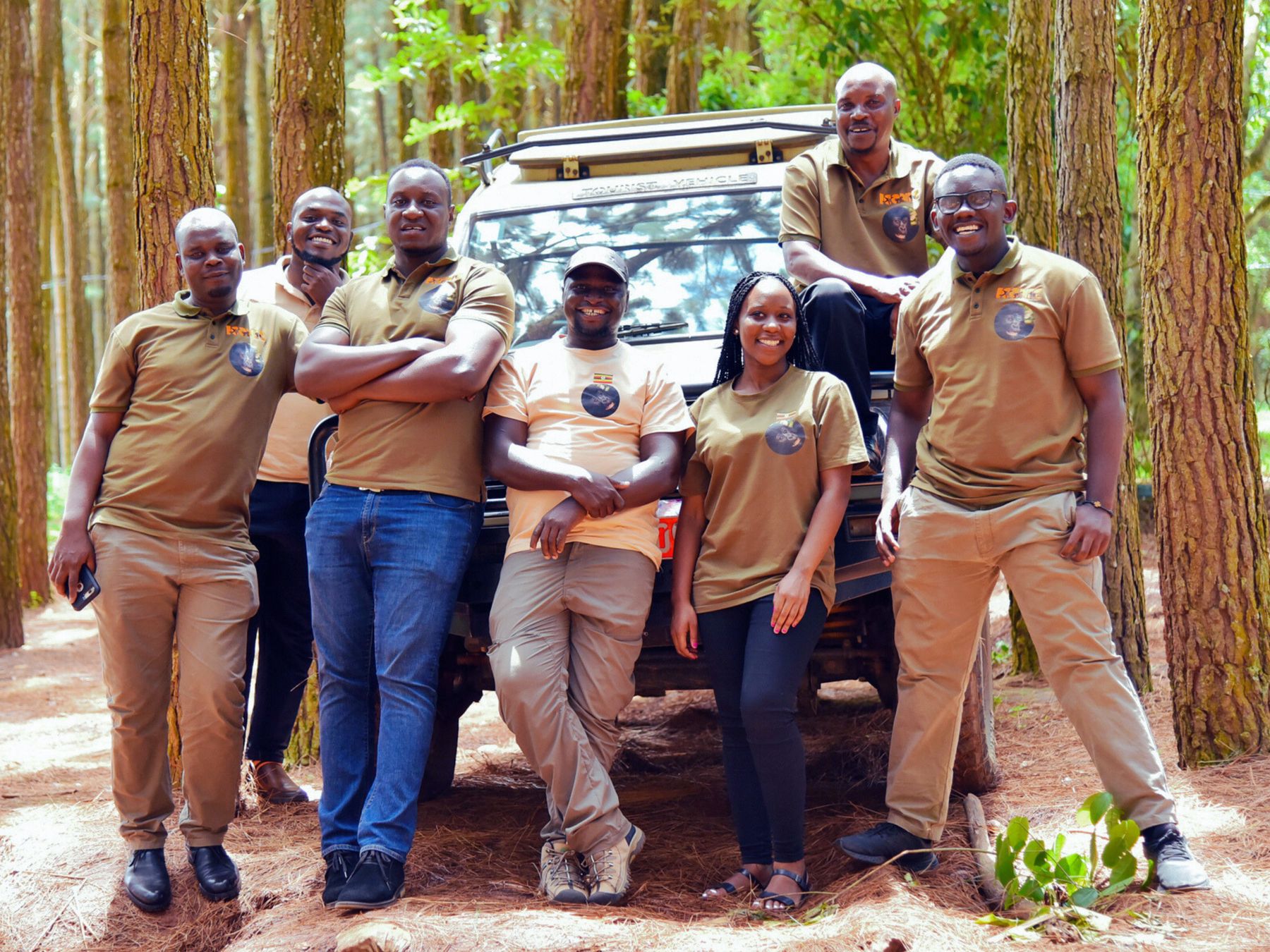
The Iconic Travel Services team
Most gorilla trekking guides are written by people who have never stood on a Bwindi ridge at six in the morning. This one is written by a company that runs the treks.
Iconic Travel Services operates from Kampala and runs gorilla treks in both Uganda and Rwanda. We wrote this because travellers ask us the same four questions, and those questions are rarely answered straight online:
- What does it actually cost, once everything is counted?
- How fit do I need to be?
- Uganda or Rwanda?
- When should I go?
The third is the one people get wrong most often, usually because the guide they read was written by somebody who sells only one of the two countries. We sell both, and they suit different travellers. You will find the honest comparison here rather than a case for whichever we would rather book.
By the end you should be able to decide which country fits you, what to budget, when to travel, and what the morning of the trek will actually be like. Where something is a matter of judgement rather than fact, we say so.
02
Uganda and Rwanda at a glance
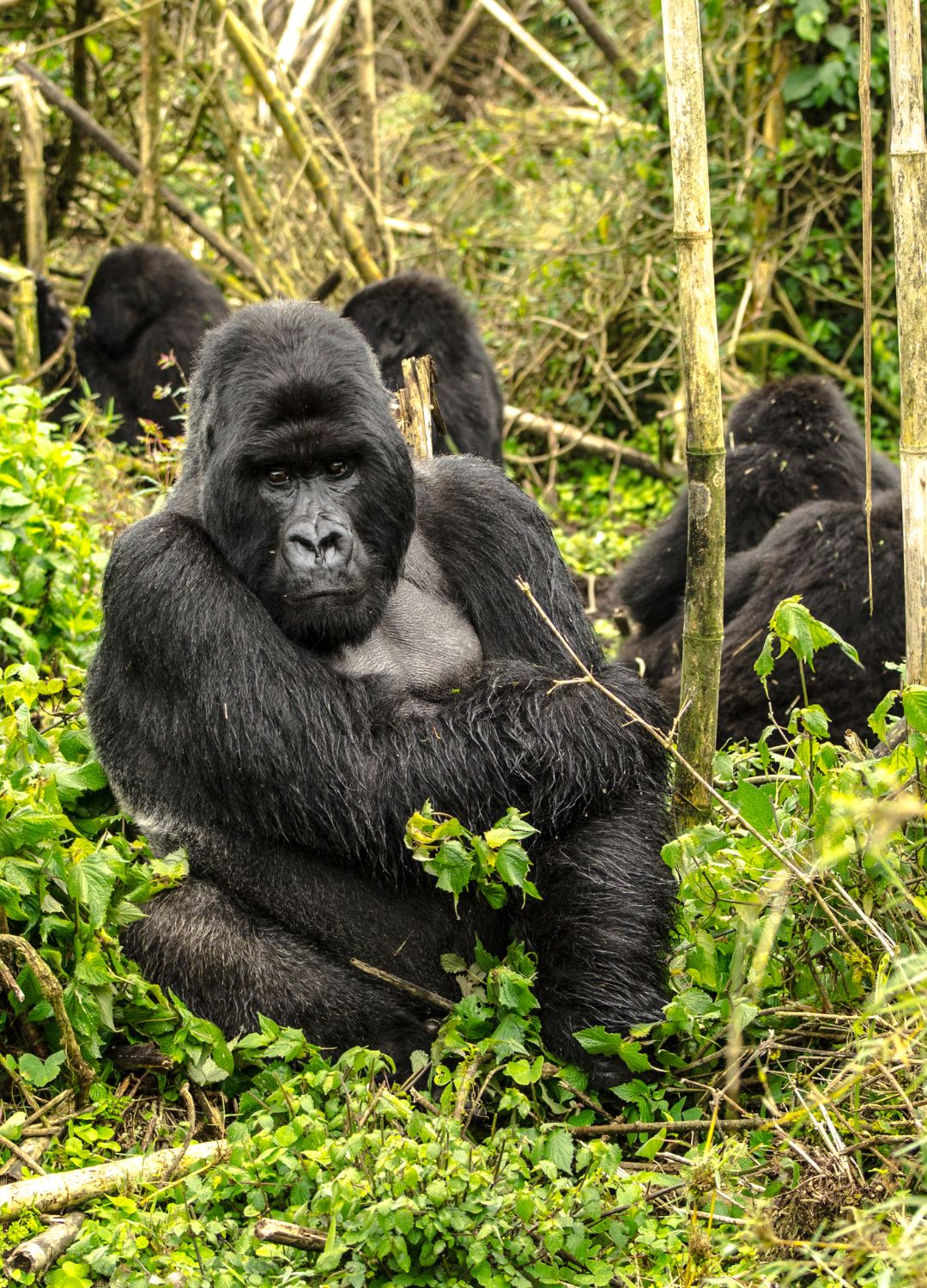
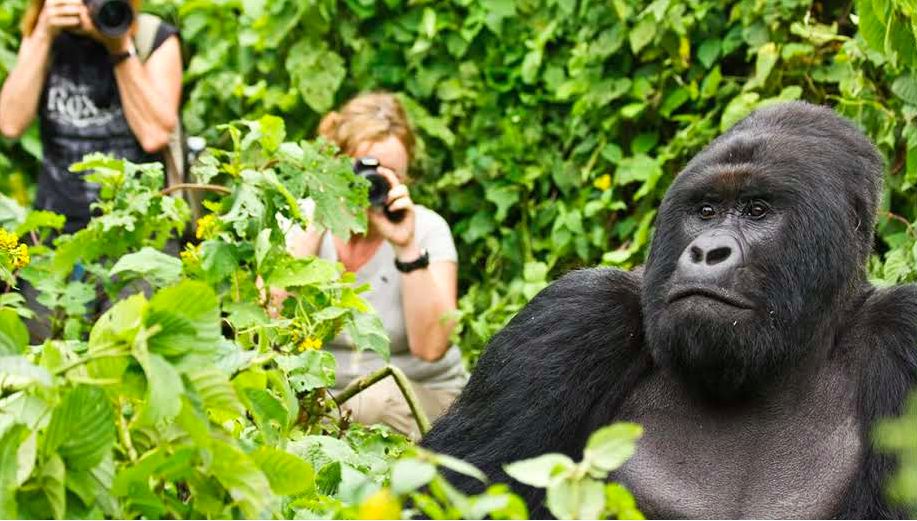
A habituated family at rest
The headline difference is the permit: US$800 in Uganda against US$1,500 in Rwanda. Almost everything else follows from geography.
Sources: UWA and RDB permit rates compared · 2026 Rwanda gorilla permits · Bwindi sectors
Read that table one way and Uganda is far better value. Read it another and Rwanda is markedly easier to reach and gentler underfoot. Both readings are correct, which is why this choice is a genuine judgement rather than an obvious one. We work through it properly further down.
03
Permits: what they cost and how to secure one
The hour with the family
The single most important thing to understand about 2026 is that you can no longer hold a Uganda permit without paying for it. Until March 2026 operators could reserve a permit for seven days while you made up your mind. That window has been suspended. A permit is now secured only when it is paid for in full, at the moment of booking.
This changes how you should plan. Previously you could settle your dates, ask an operator to hold permits, and confirm the rest of the trip afterwards. Now the permit is the first irreversible commitment of the whole trip, and the trek date fixes everything else around it.
What you pay
Uganda's low-season rate of US$600 applies in April, May and November. These permits are tied to a specific date and cannot be rescheduled, so they suit travellers whose dates are genuinely fixed. Rwanda's low-season discount works differently: 30% off between November and May, but only if you also spend two nights in Akagera or Nyungwe. That condition is worth running the numbers on, because two extra nights can cost more than the US$450 it saves.
Booking in practice
Permits for peak months sell out months ahead. Rushaga holds the most habituated families and therefore the best availability in Uganda; Rwanda's hard ceiling of 96 permits a day makes it the tighter of the two.
In Uganda you book by sector, not by gorilla family. Which family you trek is decided at the briefing on the morning itself, so choosing your sector is the only control you have over the kind of trek you get.
A few rules worth knowing before you pay:
- Neither country refunds a missed trek, for any reason, including a delayed flight.
- Permits are non-transferable. Passport details are checked at the briefing.
- Turning up with a cold or flu can mean being refused entry, without a refund. Gorillas are vulnerable to human respiratory infections.
- Rwanda refunds 75% if a full day's search finds no gorillas, and offers a retry or a full refund if your assigned family crosses a border.
- Operator-held permits in Rwanda can usually be moved with 30 days' notice.
Sources: Uganda permit rules and 2026 changes · Revised UWA tariff 2026–2027 · Rwanda permits and refund rules
UWA reviews its tariff on a two-year cycle and the current cycle closes in mid-2026, so rates beyond that are not yet settled. We confirm the live rate with UWA before quoting any trip.
04
Trekking in Uganda: Bwindi and Mgahinga
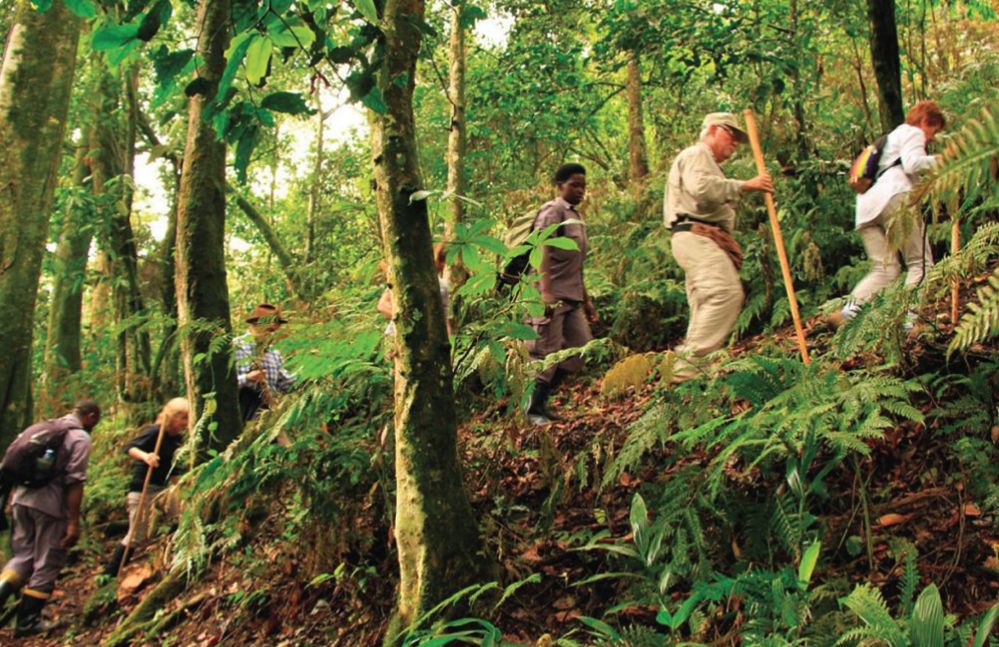
Into the forest
Choosing your sector is the most consequential decision you will make about a Uganda trek, because the four sectors of Bwindi are genuinely different experiences and you cannot switch between them once you have booked.
Bwindi is old, dense montane rainforest — the name is not marketing. The undergrowth is thick, the ground is steep, and after rain it is slick. This is the harder of the two countries to trek, and also the more atmospheric: you are inside a closed forest rather than walking up an open volcanic slope.
Buhoma (north)
GentlestHabituated families
3–5
Varied but not punishing. Treks commonly 3–4 hours
Suits: First-time trekkers, older travellers, families with teenagers, and trips combining Queen Elizabeth, Kibale or Murchison
Ruhija (east)
Habituated families
~4
Moderate to hard. Highest sector at about 2,350m; rough roads needing 4WD
Suits: Birders and photographers, and anyone wanting fewer people who will accept simpler lodging
Rushaga (south)
Habituated families
7–9
Moderate to steep
Suits: Best permit availability, the only sector offering habituation, and the easiest approach from Kigali
Nkuringo (south)
HardestHabituated families
~3
The hardest. A steep descent into dense forest, then a steep climb out
Suits: Fit, experienced hikers who want solitude and will trade comfort for it
Source: Bwindi sector guide
One practical warning that catches people out: Buhoma in the north and Rushaga or Nkuringo in the south are three to four hours' drive apart. You cannot stay in one and trek in another. Your lodge must match your permit sector, which is why we book the two together rather than separately.
Family counts move. Groups split, merge and occasionally wander across a border, so treat the numbers above as the shape of each sector rather than a fixed inventory.
Mgahinga
Mgahinga Gorilla National Park, in the Virunga range near Kisoro, has a single habituated family and sees a fraction of Bwindi's visitors. It is a quieter, more open landscape than Bwindi and pairs naturally with golden monkey tracking. The trade-off is that one family means no margin: if that group moves across into Rwanda or the DRC, there is no second option in the park.
Getting there
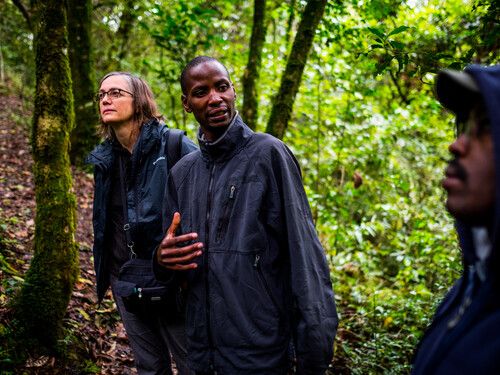
Bwindi is 8 to 10 hours by road from Entebbe, which is a real day of driving and the reason our shorter itineraries fly. Scheduled flights to Kihihi or Kisoro take 1 to 1.5 hours, with a road transfer of about an hour at the other end. Travellers coming from Kigali often reach the southern sectors faster than those coming from Entebbe — Rushaga is roughly 4 to 5 hours from Kigali via Cyanika, which is a legitimate and frequently overlooked way to trek Uganda.
05
Trekking in Rwanda: Volcanoes National Park
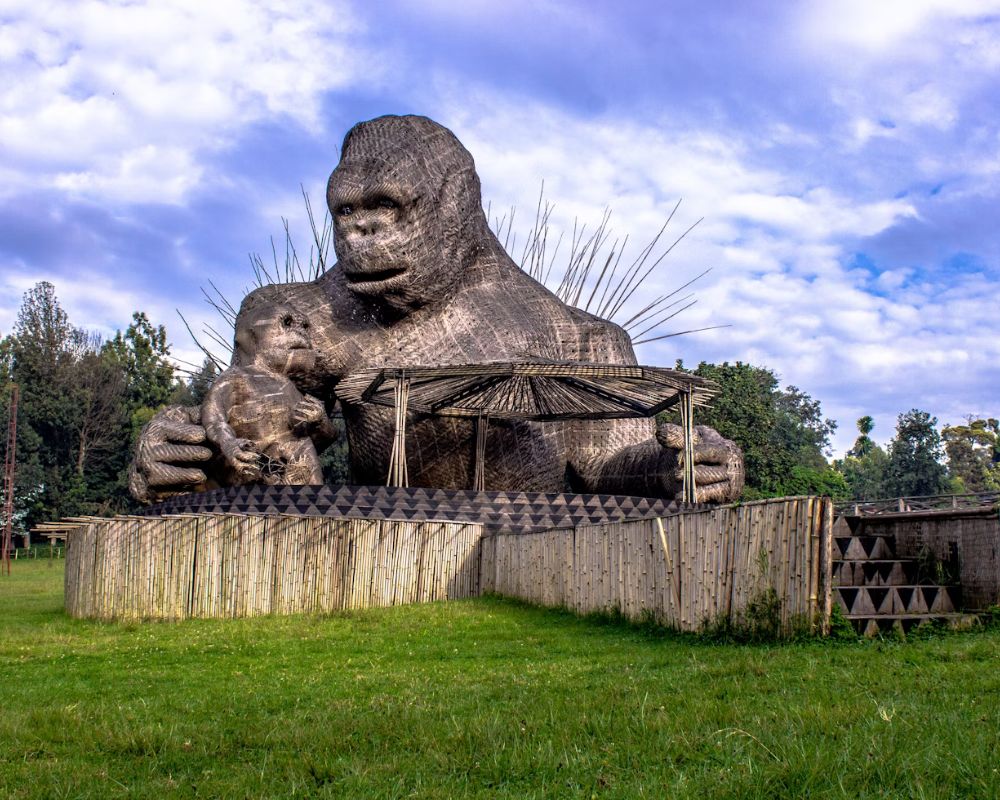
Rwanda
Rwanda's case rests on one fact: you can land at Kigali in the afternoon and be trekking the following morning. Nothing in Uganda is that close.
Volcanoes National Park sits on the Rwandan flank of the Virunga massif, a chain of eight volcanoes shared with Uganda and the DRC. The park is roughly two to three hours by road from Kigali on good tarmac, and most lodges cluster around Musanze and Kinigi, within easy reach of the park headquarters where every trek begins.
The landscape is quite different from Bwindi. You climb through farmland, cross the park wall, and move into bamboo and open hagenia woodland on volcanic slopes between 2,500m and 4,000m. There is more sky, more visibility, and the ground underfoot is generally kinder than Bwindi's forest floor. Treks run from about 30 minutes to four hours or more, depending on where your family has moved overnight.
What you get for US$1,500
It is a lot of money, and worth being clear about what it buys and what it does not.
It buys access, convenience and a shorter trip. It buys a park that is tightly run, close to an international airport, with lodges at the top of the market. For a traveller with limited days or limited appetite for rough roads, that is real value rather than a premium for its own sake.
It does not buy a better hour with the gorillas. The hour is the same in both countries: same limit of eight visitors, same rules, same animals. Anyone who tells you Rwanda's gorillas are more impressive is selling you something.
Availability
Twelve habituated families are open to visitors, eight visitors each, which caps the park at 96 permits a day. That ceiling is lower than Bwindi's and the dates go quickly. Eight further habituated groups exist, used mainly by researchers; if a tourist family moves into Uganda or the DRC, one of these may be assigned instead.
Rwanda does not offer a habituation experience. If four hours with a semi-habituated group appeals more than one hour with a fully habituated one, that decision makes itself — Rushaga in Uganda is the only place it is available.
Sources: 2026 Rwanda gorilla permits · Rwanda trekking costs and conditions
06
Choosing between them
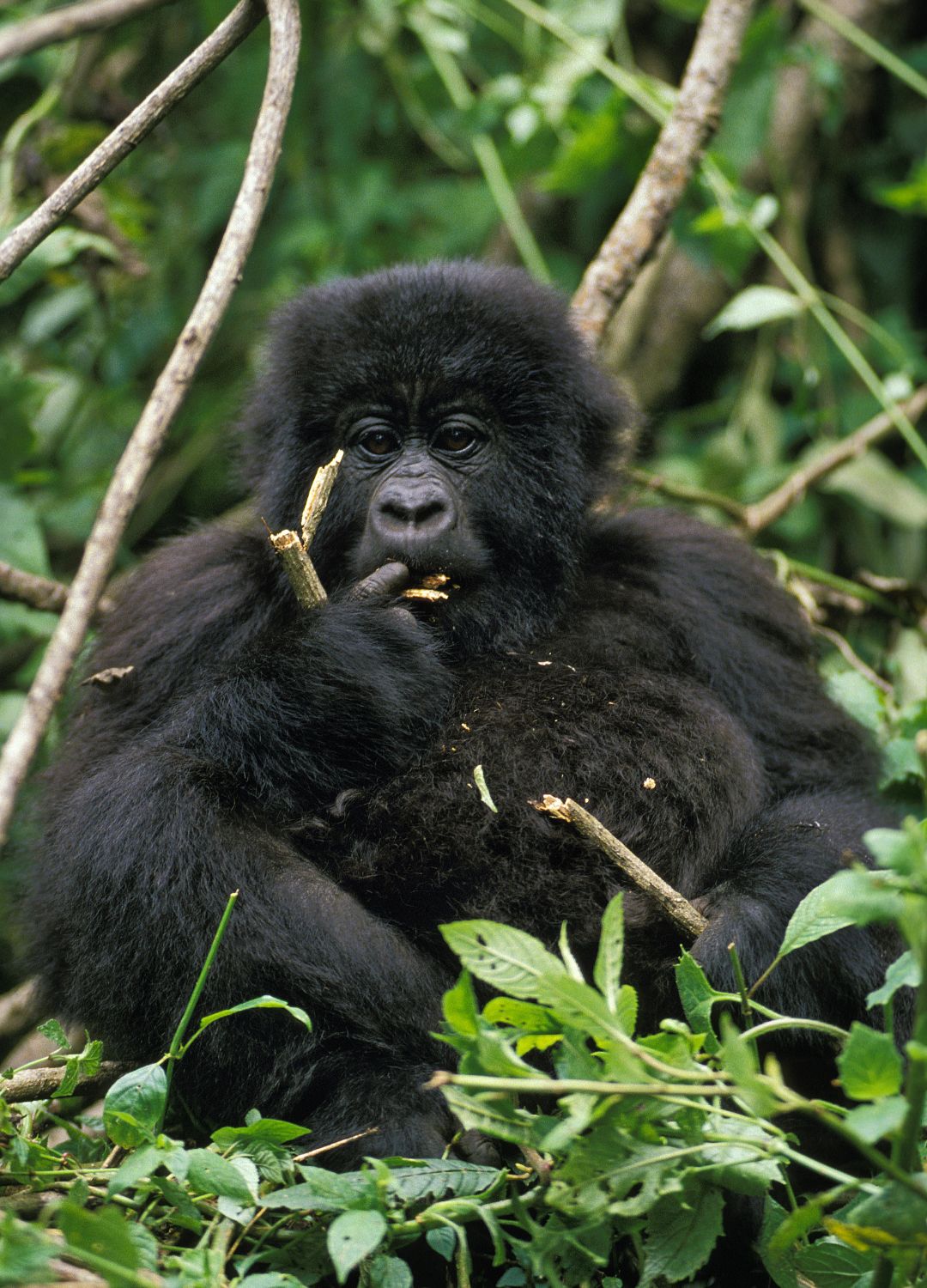
Same hour, same rules, either country
The hour with the gorillas is the same in both countries. Everything you are choosing between happens before and after that hour: how long you travel, how hard you walk, what you spend, and what else you see.
Choose Uganda if…
- The US$700 difference per permit matters — for two people that is US$1,400, which buys several nights of good lodging
- You want to trek twice. Two Uganda permits still cost less than one Rwandan one
- You want more than gorillas — chimpanzees at Kibale, the Nile at Murchison, tree-climbing lions at Ishasha
- You want the four-hour habituation experience, available only at Rushaga
- You want the closed-forest atmosphere — Bwindi feels ancient in a way the Virungas do not
- You are comfortable with long drives, rough roads and simpler lodges in the remoter sectors
Choose Rwanda if…
- You are short of days and want to fly in, trek, and fly out inside three or four
- You would rather not spend a full day on a road, or you are travelling with someone who would find that hard
- You want the top end of the lodge market, which Rwanda currently does better than Uganda
- You want the gentler ground: open volcanic slopes and bamboo rather than closed, steep forest
- You want more light and more open views, which generally means better photographs
- Certainty of logistics matters more to you than cost
The honest summary
If your budget is the binding constraint, go to Uganda. The saving is real and it does not buy you a lesser hour.
If your time is the binding constraint, go to Rwanda. A Kigali-based trek is the most efficient way to see mountain gorillas anywhere, and compressing a Uganda trip into the same window means paying for flights that erode the permit saving anyway.
If neither is binding, the question becomes what kind of trip you want. Uganda rewards travellers who want to keep going — gorillas are the start of a journey through forests, savannah and the Nile. Rwanda rewards travellers who want one extraordinary thing done beautifully, with very little friction around it.
And if you have the days and the budget for both, the Virungas and Bwindi are a few hours apart across one border. Trekking both in a single trip is the comparison nobody writes about, and it is better than either alone.
07
Trek day: what actually happens
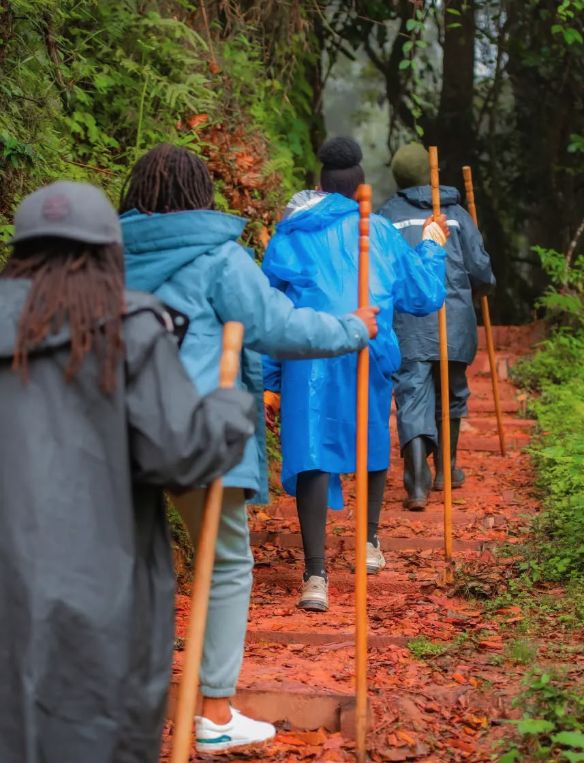
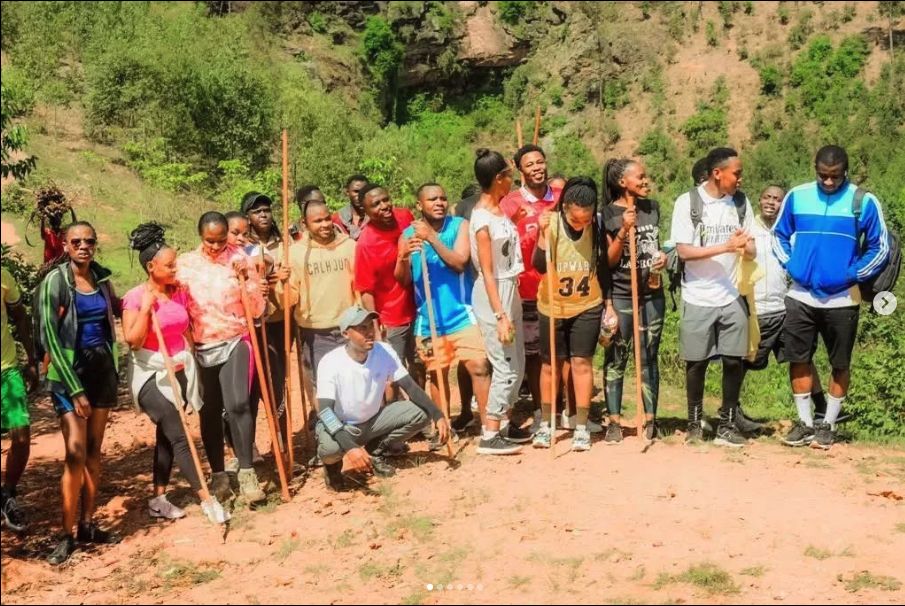
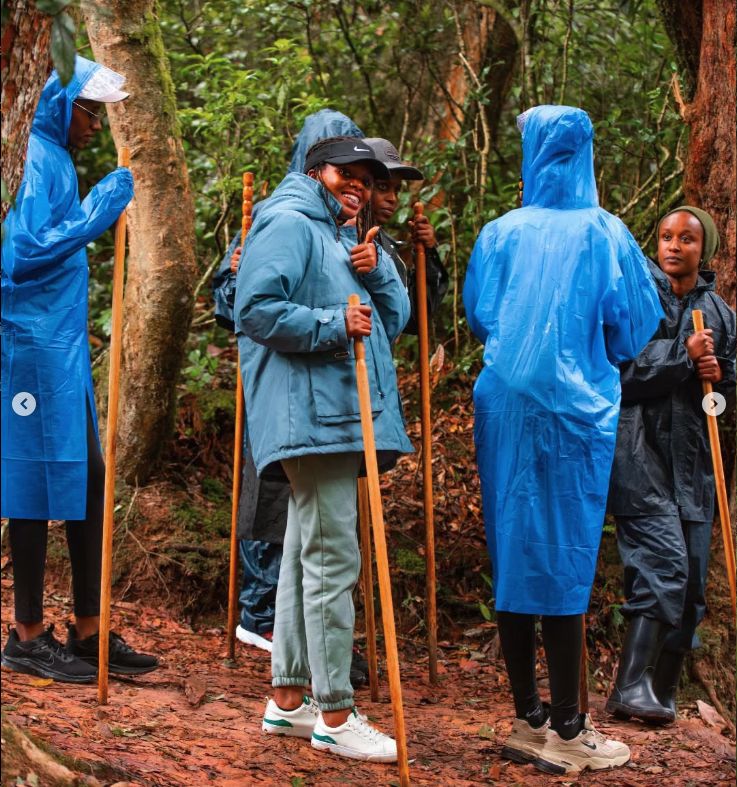
Walking sticks handed out before the trek
The day runs to the same shape in both countries, and almost nobody describes it accurately beforehand.
- You arrive at park headquarters around 7am. Bring your passport — it is checked against your permit, and the name must match.
- You are sorted into a group of eight. Rangers ask about your fitness, and it is worth answering honestly rather than optimistically. Groups are matched to families by how far and how steep the walk is likely to be. Overstating your fitness is how people end up on the Nkuringo descent when they wanted Buhoma.
- A briefing covers the rules. Seven metres distance, no flash, no eating near the gorillas, and you turn away to cough or sneeze. If you are visibly unwell you may be turned back here.
- You hire a porter, and you should. Roughly US$20 plus a tip. They carry your bag, and on wet ground a hand on a steep section is worth considerably more than the money. The porters are drawn from surrounding communities, and this is the most direct way your trip reaches the people who live alongside the gorillas.
- You walk. Trackers have been with the family since dawn and radio their position back, so you are walking towards a known point rather than searching. Anywhere from 30 minutes to six hours or more.
- You get one hour. It begins when the gorillas are sighted. You leave your bags a short distance back and go in with cameras only.
- You walk out, usually faster than you walked in, and receive a certificate at headquarters.
About that hour
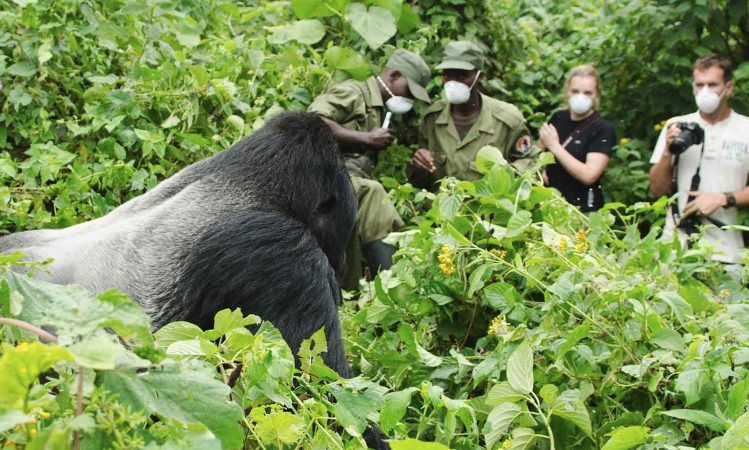
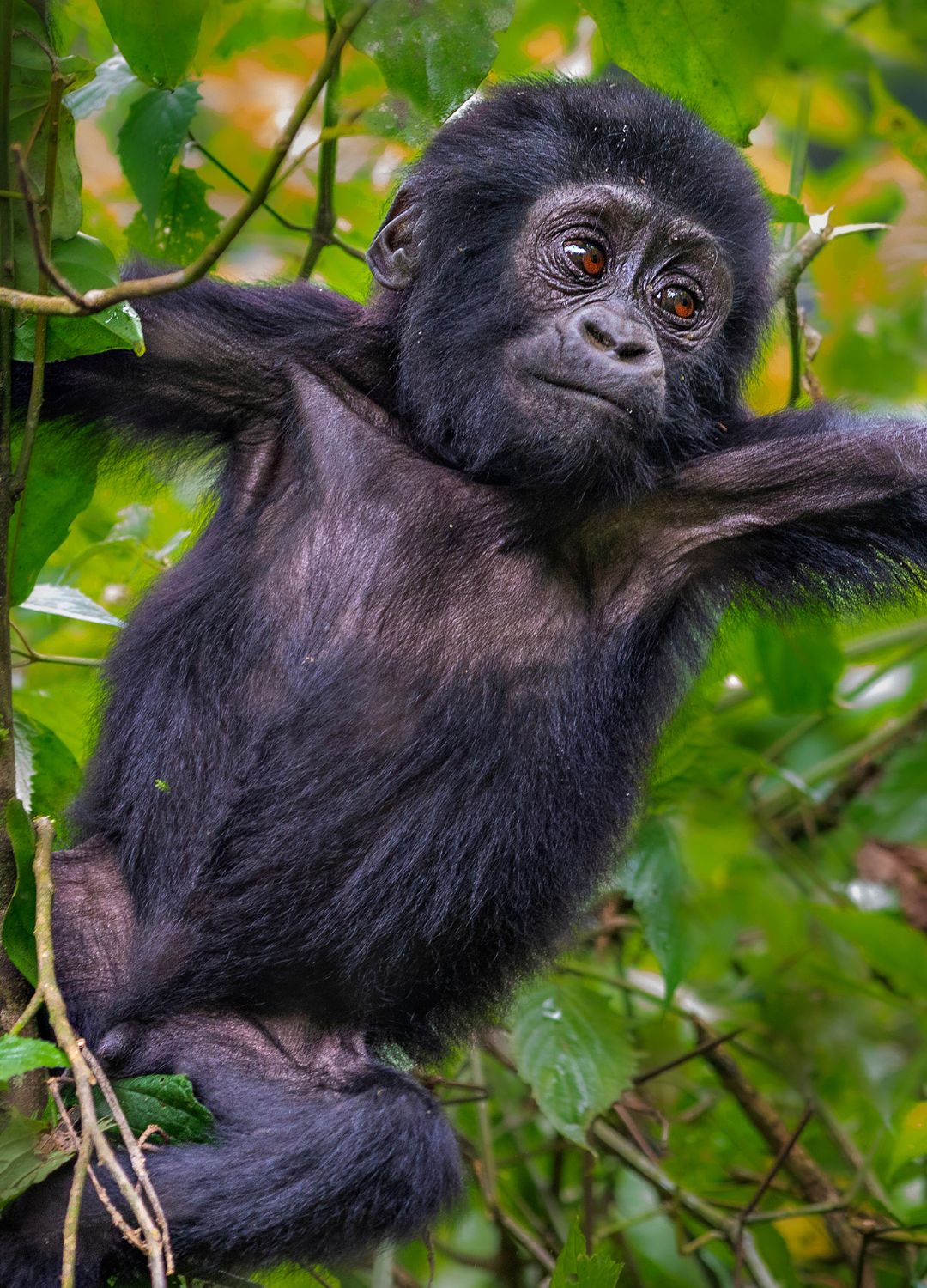
It passes extraordinarily quickly. Most people spend a good part of it behind a camera and later wish they had not.
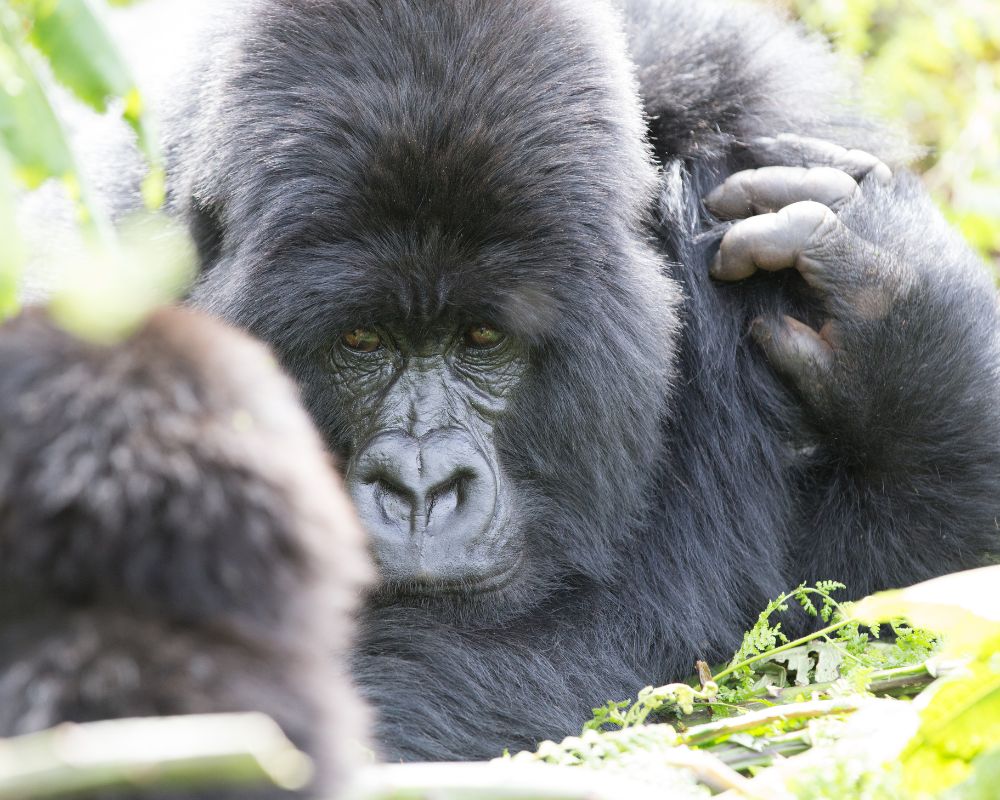
The gorillas are indifferent to you, which is the thing nobody expects. They are not performing and they are not alarmed. A silverback will often be lying a few metres away entirely at ease while juveniles tumble past. The seven-metre rule is yours to keep, not theirs — young gorillas in particular will walk straight past you, and the instruction is to stay still and let them.
Our own advice: give the first twenty minutes to simply watching, before you lift the camera at all.
08
Fitness, age and accessibility
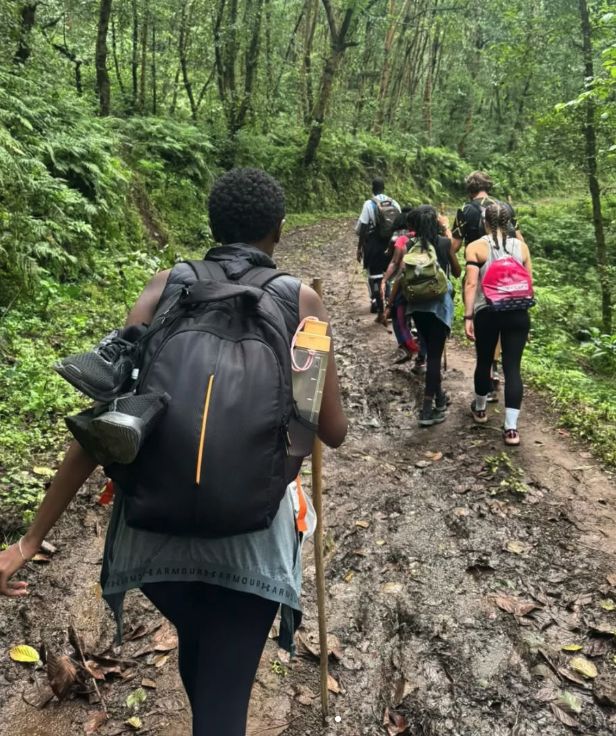
The ground, more than the distance, is what makes it hard
You do not need to be an athlete. You do need to be able to walk uphill on uneven ground for several hours, and to accept that you will not know how many hours until you are walking.
The minimum age is 15 in both countries, strictly enforced, with no exceptions and no discretion at the gate. Passports are checked. A child who turns 15 the week after your trek cannot go, so this one governs family trip planning entirely.
There is no maximum age. We have sent people well into their seventies up to gorillas. What matters is not the number but whether you can manage sustained uphill walking at altitude.
What the trek actually demands
Treks run 2 to 7 hours in Uganda and 30 minutes to 4 hours or more in Rwanda, round trip, plus the hour with the gorillas. The variance is the hard part to plan for: the gorillas move overnight, and a family that was 40 minutes from the trailhead yesterday may be three hours away today. Nobody can promise you a short trek.
Altitude is a genuine factor and an underrated one. Rwanda's slopes run between 2,500m and 4,000m, and Bwindi's Ruhija sector sits around 2,350m. If you are arriving from sea level, this is noticeably harder than the same walk at home. Give yourself a day in-country before trekking if you can.
The ground is the other factor. Bwindi after rain is slick, steep and tangled, and most people who find the trek difficult find it difficult for that reason rather than distance.
If walking is a concern
Several options exist, and they are worth arranging in advance rather than on the morning:
- Request a nearer family at the briefing. Rangers genuinely try to match people to appropriate groups. Be honest about your fitness.
- Choose your sector deliberately. Buhoma is the gentlest in Uganda; Nkuringo is the hardest by a wide margin.
- Hire a porter, and consider two. Beyond carrying your bag they will physically assist you on steep sections.
- A sedan chair is available. Carried by a team of porters, it costs several hundred dollars and must be booked ahead. It is not dignified and it is not cheap, but it has taken people to gorillas who could not otherwise have gone.
If you have a knee, hip, heart or respiratory condition, tell us when you enquire rather than at the briefing. It changes which sector we recommend, and that is a decision made months ahead, not on the day.
09
When to go
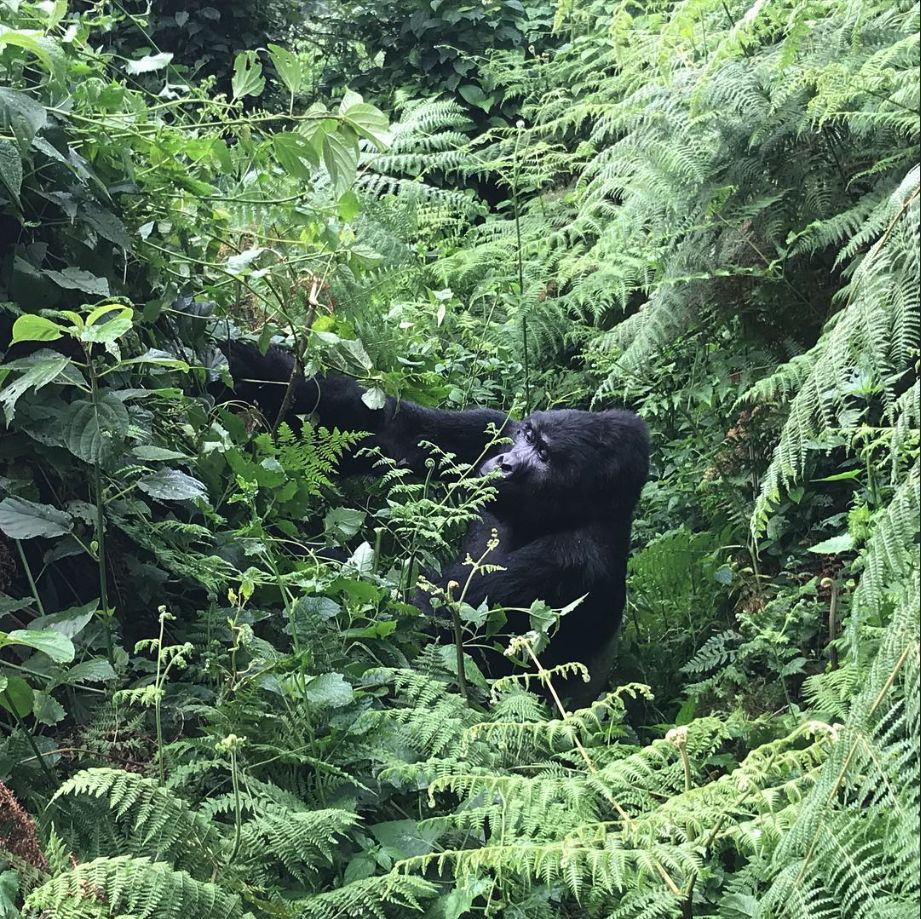
Gorillas are tracked every day of the year
There is no closed season. Gorillas are tracked every day of the year, and the trek happens whatever the weather. What changes is how hard the walk is, how good the photographs are, and what you pay.
J
F
M
A
M
J
J
A
S
O
N
D
Long dry
June to September
Firmest ground, most reliable trekking. Peak demand
Permits: Full price. Book 6–12 months ahead
Short dry
December to February
Dry and warm, slightly greener. Busy over Christmas and New Year
Permits: Full price. Festive dates go earliest
Long rains
March to May
Wettest. Slick, demanding underfoot, but the forest is at its most alive
Permits: April and May at US$600 in Uganda; Rwanda discounted
Short rains
October to November
Intermittent rain, usually afternoon. Quieter trails
Permits: November at US$600 in Uganda; Rwanda discounted
What the seasons actually mean
The dry months are easier walking and the obvious choice for a first trek, particularly if you have any doubt about fitness. They are also when permits are scarcest and lodges dearest.
The wet months are genuinely harder. Bwindi's clay turns slippery and a three-hour trek can feel like five. In exchange you get a quieter forest, lower prices, dramatic light, and vegetation at its most spectacular. Experienced trekkers and photographers often prefer them.
Two cautions on the low-season rate. Uganda's US$600 permits are tied to a fixed date and cannot be rescheduled, so they only make sense if your plans are firm. Rwanda's 30% discount requires two nights in Akagera or Nyungwe, which may cost more than the US$450 it saves — though both parks are worth visiting on their own merits, so it is only a false economy if you would not otherwise have gone.
Our own view: if this is your one chance, pay for the dry season. If you are an experienced walker, or you are coming back, the shoulder months are the better trip and the better value.
Source: Uganda low-season permit rates
10
What it costs, all in
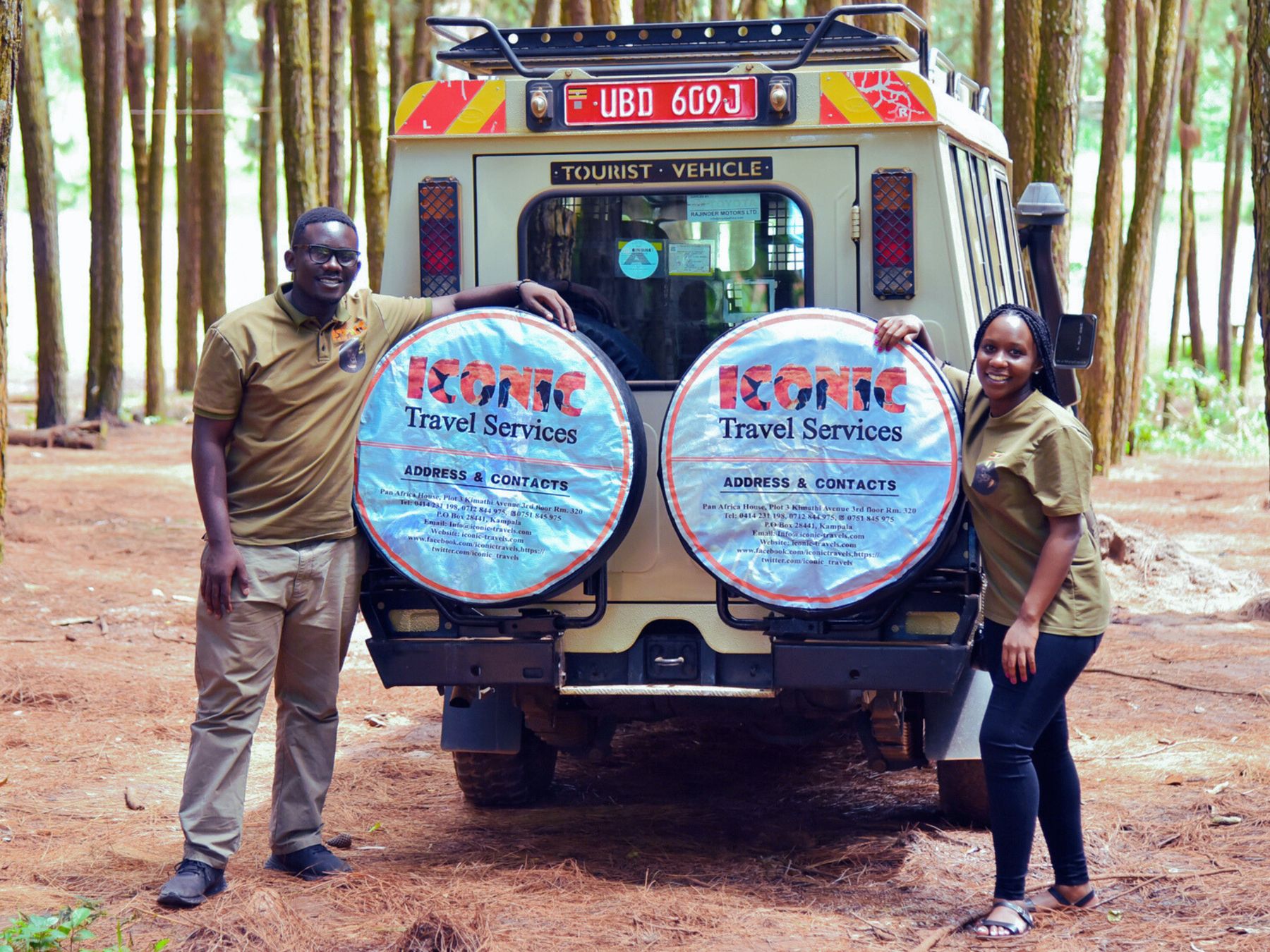
Our own vehicles, our own guides
The permit is the number everyone quotes and it is rarely more than a third of the trip. Here is the honest structure of what a gorilla trek costs.
Lodging ranges are indicative. We quote real rates for real dates when we build your itinerary.
Where the money actually goes
Lodging is the swing factor, not the permit. The gap between a comfortable mid-range lodge and a top-tier one is larger over a week than the entire permit difference between the two countries. If budget is tight, this is the lever — not the destination.
Vehicle costs divide, permits do not. Four people share one vehicle and driver-guide but pay four permits. This is why per-person costs fall sharply from two travellers to four, and why solo gorilla trips are disproportionately expensive.
Flying in Uganda buys back two days. Entebbe to Bwindi is 8 to 10 hours each way by road. Flying costs more but returns most of two days to your trip, and on a short itinerary that usually justifies itself.
Tipping
Not obligatory, and widely expected. As a guide: US$10–20 per person per day for your driver-guide, US$10–15 for trekking rangers shared across the group, and US$10–20 for your porter on top of the hire fee. Lodges normally have a staff tip box.
A note on very cheap quotes
If a quoted trip looks substantially below everything else, check what has been left out. The usual omissions are the permit itself, park entry fees beyond the permit, and the difference between a lodge inside the park and one an hour's drive away — which, on a 7am briefing, means a 5am start. We would rather lose a booking on price than win one by leaving things out of a quote.
11
Practicalities: visas, health and what to pack
Rain, mud and nettles: pack for the forest
Visas
Uganda and Rwanda each issue a single-entry tourist visa for around US$50, applied for online before travel. If your trip crosses the border — and many of the best ones do — the East Africa Tourist Visa at around US$100 covers Uganda, Rwanda and Kenya with multiple entries for 90 days. It must be applied for through the country you enter first, which is a detail that catches people out.
Your passport needs at least six months' validity beyond your travel dates, and the name on it must match your permit exactly. Confirm current requirements with the relevant immigration authority before you travel; we check them for every booking.
Health
Yellow fever vaccination is required for entry to both countries, and the certificate is checked at the airport. Get it well ahead of travel.
Malaria prophylaxis is strongly advised for both. Bwindi is at altitude and lower risk than the savannah parks, but any Uganda trip that adds Queen Elizabeth or Murchison puts you squarely in malaria country.
The rule that matters most on the day: if you are unwell, you may be refused. Gorillas share enough of our DNA to catch our respiratory infections, and an outbreak in a habituated family is a conservation disaster. Rangers can turn back a visibly sick trekker, without a refund. This is also the single strongest argument for comprehensive travel insurance — a permit is a non-refundable US$800 to US$1,500 that a head cold can take from you.
Insurance should cover trip cancellation, medical evacuation and, specifically, high-altitude trekking. Check that last one; some policies exclude it.
What to pack
The forest is wet, thorny and steep, and almost everything on this list exists because of one of those three facts.
Essential
- Waterproof hiking boots, already broken in, with ankle support
- Long trousers and a long-sleeved shirt — nettles and thorns, not modesty
- Gardening gloves, genuinely. For grabbing vegetation on steep ground
- Waterproof jacket. It rains in a rainforest, in every season
- Gaiters, or trousers tucked into socks, against safari ants
- A dry bag or waterproof cover for your camera
- At least two litres of water
- Insect repellent and sunscreen — altitude sun is stronger than it feels
Worth bringing
- Walking pole, though carved ones are available at the trailhead
- A fleece for the early start; it is cold at 7am and hot by ten
- Energy snacks
- A change of clothes left in the vehicle. You will want it
Leave behind
- Flash photography equipment. Flash is prohibited
- Drones. Prohibited in both parks without permits you will not get
- Camouflage clothing. Restricted in both countries, as it is associated with the military
12
Extending your journey
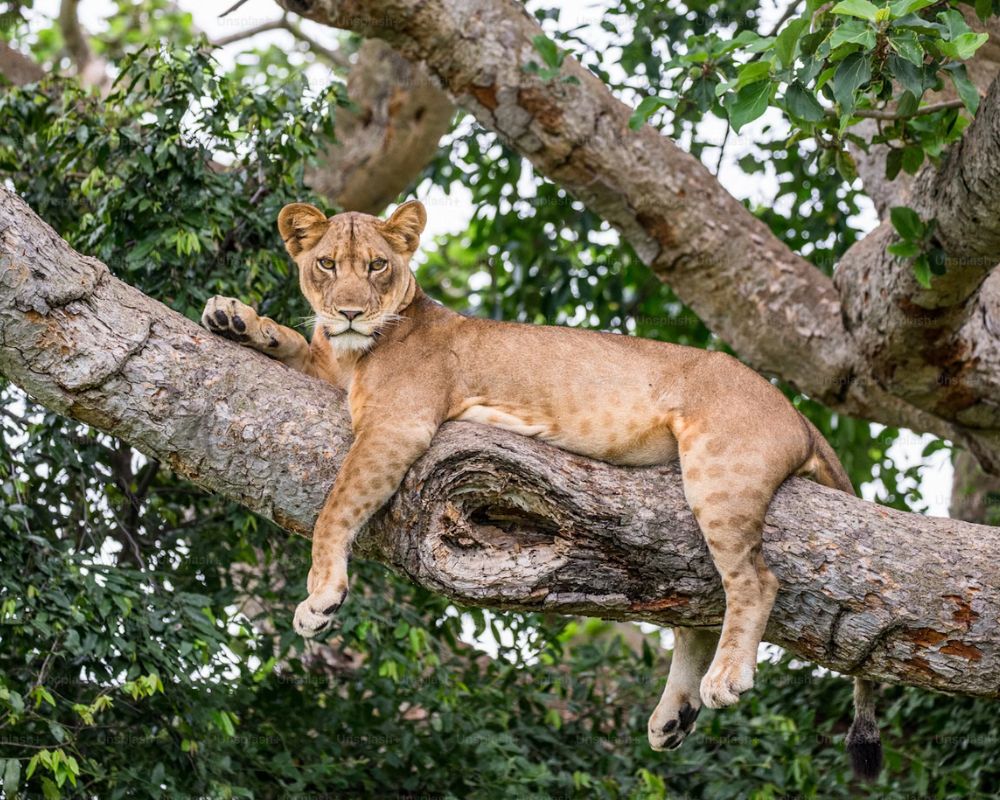
A tree-climbing lion
Most people who come for gorillas stay for something else, and the honest reason is that you have already absorbed the long flight and the permit. The marginal cost of three more days is small against what you have already committed.
In Uganda
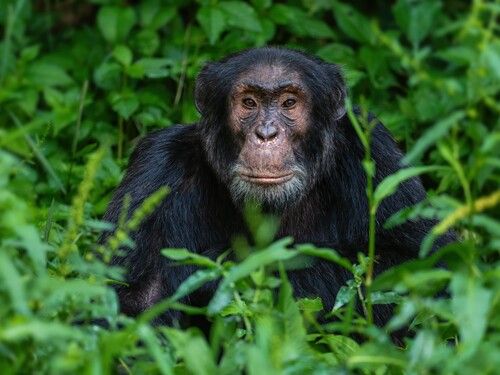
Chimpanzee trekking at Kibale is the natural pairing and the one we recommend most often. Kibale holds one of the highest primate densities in Africa, and chimpanzees are a completely different animal to be near — loud, fast, constantly arguing. It adds two days and sits on the road between Entebbe and Bwindi, so it costs you almost nothing in detour.
Queen Elizabeth National Park gives you the savannah counterpoint: elephant, buffalo, the Kazinga Channel boat, and the tree-climbing lions of the Ishasha sector in the south, which is directly on the route to Bwindi.
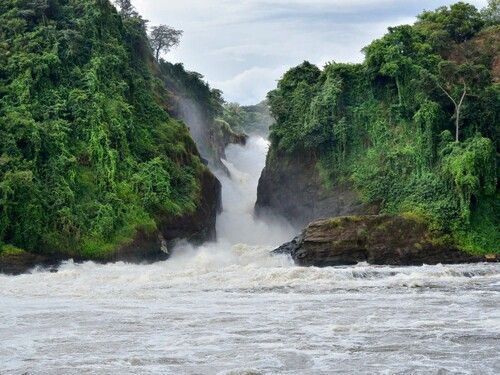
Murchison Falls is the Nile forcing itself through a seven-metre gap, and it is a genuinely startling thing to stand beside. Further north, so it suits longer trips.
In Rwanda
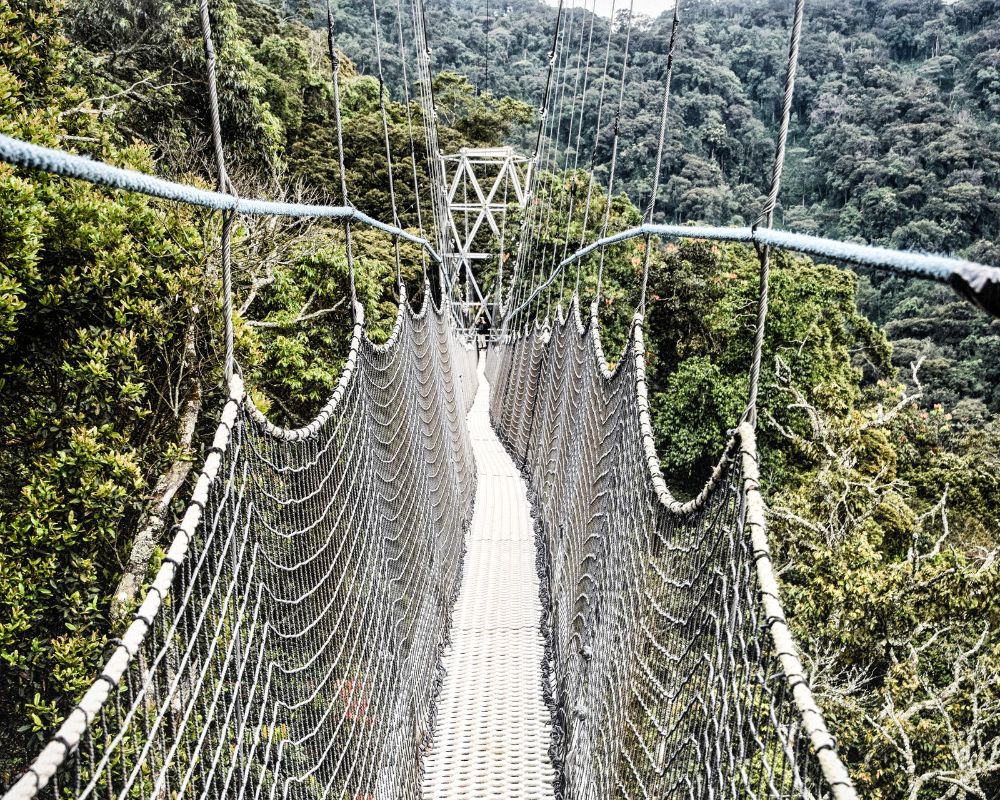
Nyungwe Forest holds chimpanzees and a canopy walkway, roughly four to five hours from Volcanoes. Akagera is Rwanda's savannah park, now a Big Five reserve after decades of restoration work, and it is the obvious second stop if you are taking the low-season permit discount.
Across East Africa
Gorillas combine naturally with the wider region. The Masai Mara and the Serengeti are a short flight away, and the wildebeest migration between them runs on a calendar that can be planned around. Zanzibar is the usual way to end a long trip, on the grounds that two weeks of early starts earns a beach.
Our own itineraries run from a three-day Bwindi trek to a twenty-four-day journey through Uganda, the Serengeti and Zanzibar. The useful thing to know is that the gorilla permit date anchors everything — because it cannot be moved, we build the rest of the trip outwards from it.

13
About Iconic Travel Services
Our Kampala office
We are a Ugandan company, based in Kampala, and we run the treks we sell rather than passing them to someone else.
Iconic Travel Services was founded by Evelyn Sylvia Nakazi and operates from Plot 3 Kimathi Avenue, Pan African House, Kampala. Our guides are our own, our vehicles are our own, and when you arrive at Entebbe the person meeting you works for us.
We are licensed by the Uganda Wildlife Authority and the Uganda Tourism Board, and are members of the Association of Uganda Tour Operators and the Uganda Safari Guides Association.
Why local matters on a permit-dependent trip
Since March 2026 a Uganda permit is secured only by paying in full at the moment of booking. There is no holding period. That makes the relationship between you and whoever buys your permit considerably more consequential than it used to be.
An operator on the ground has a standing relationship with UWA and the RDB, knows which sectors have availability before the public booking page reflects it, and can act the same morning when something comes free. An overseas agent is usually buying from an operator like us anyway, with a margin added and a day of delay in between.
It matters again when something goes wrong. Gorillas move across borders. Roads wash out. Flights are cancelled. Those problems are solved by people who are in the country and who know the rangers by name, not by an inbox in another time zone.
What we will tell you
If we think your fitness is wrong for the sector you have chosen, we will say so. If the low-season permit will not actually save you money once the conditions are counted, we will say that too. And if Rwanda suits your trip better than Uganda, we will tell you — we run both, so we have no reason not to.
We would rather lose a booking than put someone on the Nkuringo descent who should have been in Buhoma.
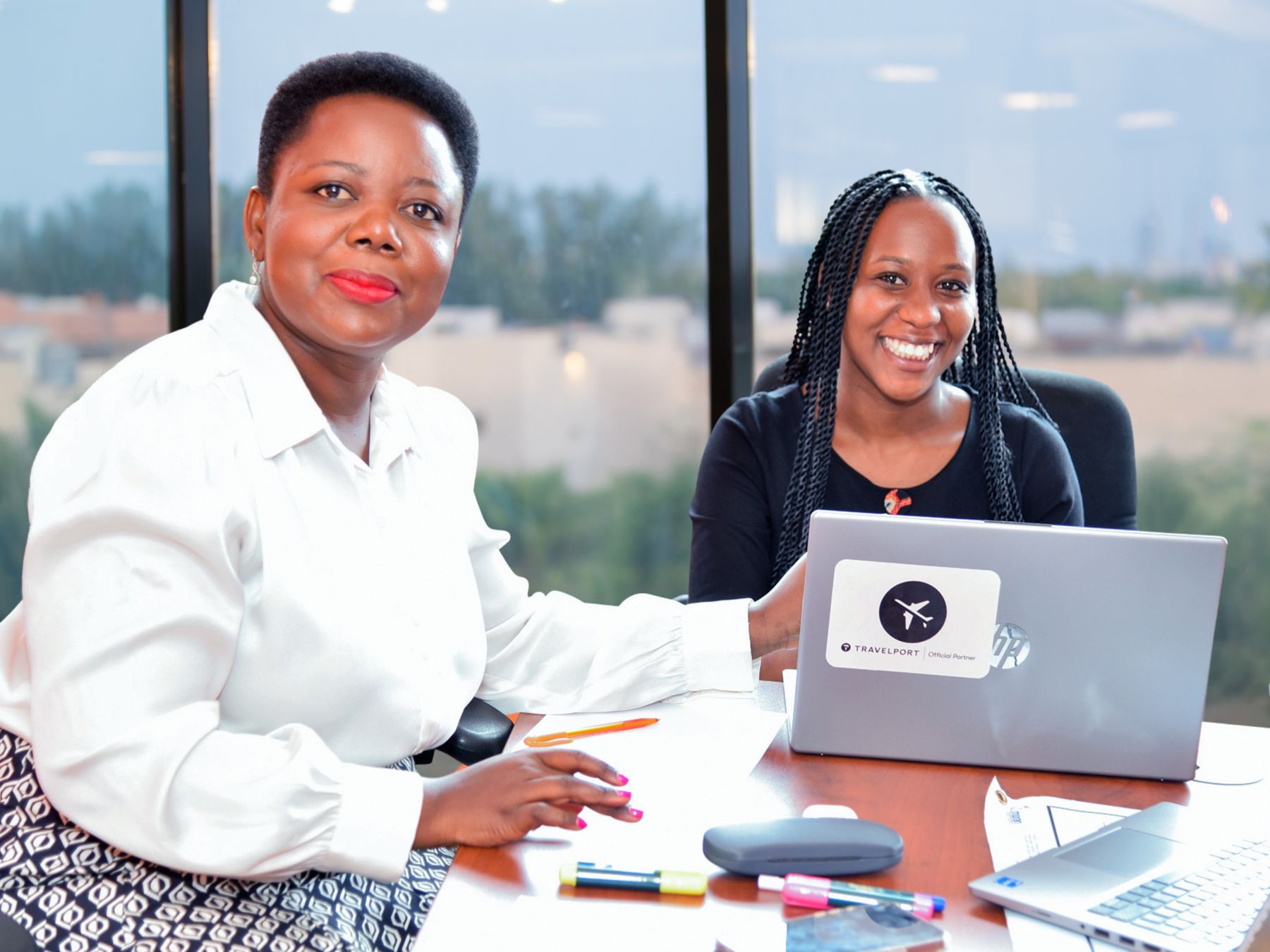
Who plans your trip
Evelyn Sylvia Nakazi
Founder, Iconic Travel Services
Your trip is designed in our office at Plot 3 Kimathi Avenue, Pan African House, Kampala, by the people who will look after you on the ground.
Planned by Evelyn, our founder, and the team in our Kampala office.
Ask anything on WhatsApp or call +256 751 845 975.
14
Planning your trek
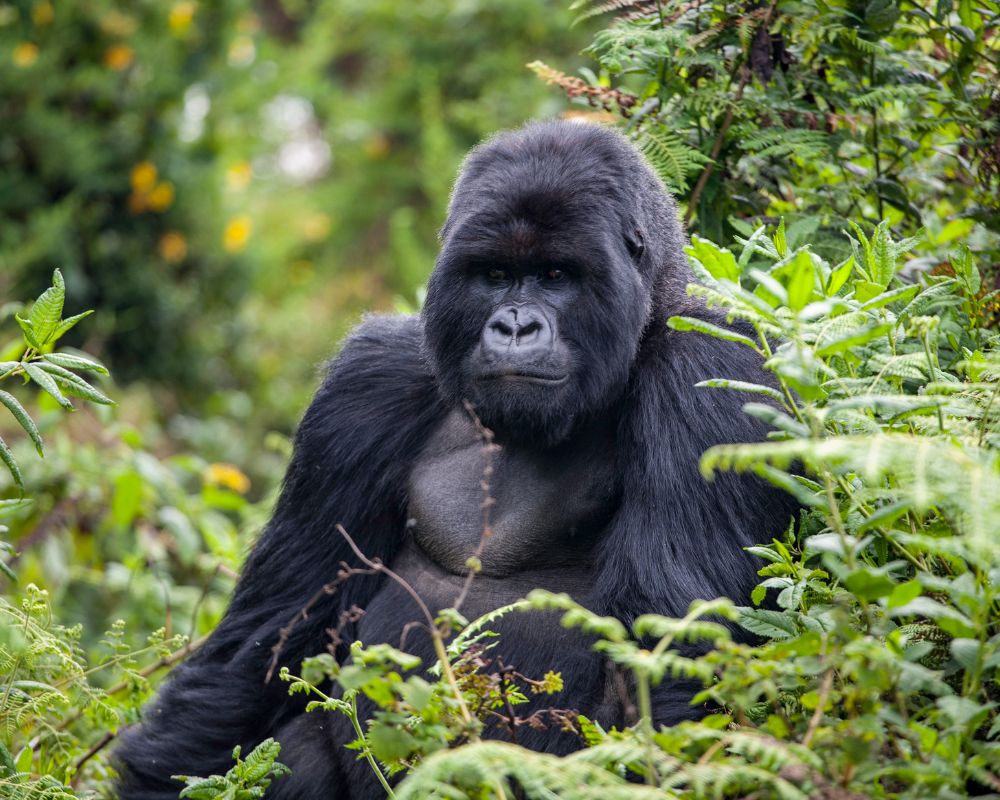
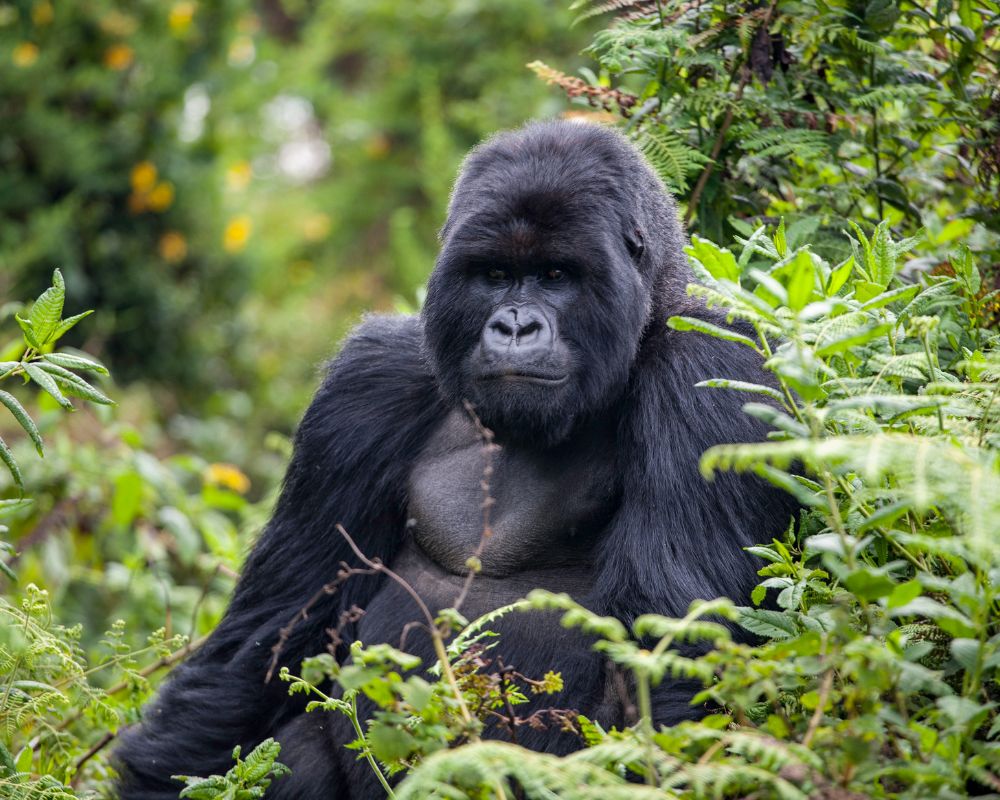
A silverback, entirely at ease
Start with the permit date. Everything else is arranged around it, and since March 2026 it can only be held by paying for it.
A sensible order:
- Decide the country, using the comparison above. If you are torn, tell us why and we will give you a straight answer rather than a sales one.
- Fix a travel window, ideally with a few days of flexibility. Permits for specific dates sell out; a week of latitude makes the difference between trekking and not.
- Talk to us before you book flights. Permit availability should determine your dates, not the other way around. This is the single most common and most expensive mistake we see.
- We confirm live availability with UWA or the RDB, recommend a sector against your fitness and interests, and quote the trip in full with nothing left out.
- Permits are secured on payment, and we build the rest of the itinerary outwards from that fixed date.
Tell us the awkward things
The details people leave out of an enquiry are usually the ones that change what we recommend: a knee that gives trouble on descents, a fear of heights, a fourteen-year-old who turns fifteen in August, a partner who is less enthusiastic about walking than you are. None of these are problems if we know early. All of them are problems if we find out at the briefing.
Talk to us
Phone and WhatsApp: +256 751 845 975 Email: evelyn@iconictravelservicesltd.com Office: Plot 3 Kimathi Avenue, Pan African House, Kampala, Uganda
Tell us roughly when you want to travel, how many of you there are, and what else you would like to see. We will come back with a tailored itinerary and a real price.
Sources
- Gorilla trek cost: Uganda and Rwanda permits compared
- 2026 Rwanda gorilla permits, Volcanoes National Park
- Rwanda gorilla trekking permits, costs and booking
- 2026 guide to Uganda gorilla permits: new rules and pricing
- Revised Uganda gorilla permit costs 2026–2027
- Bwindi sectors guide
- Uganda gorilla safari trips and prices
Permit rates and park rules change. Every figure here was checked in October 2026, and we confirm live rates with UWA and the RDB before quoting any trip.
Ready to plan your trek?
Send us your rough dates and group. A travel designer in our Kampala office replies within 24 hours with a tailored itinerary and a real price.